
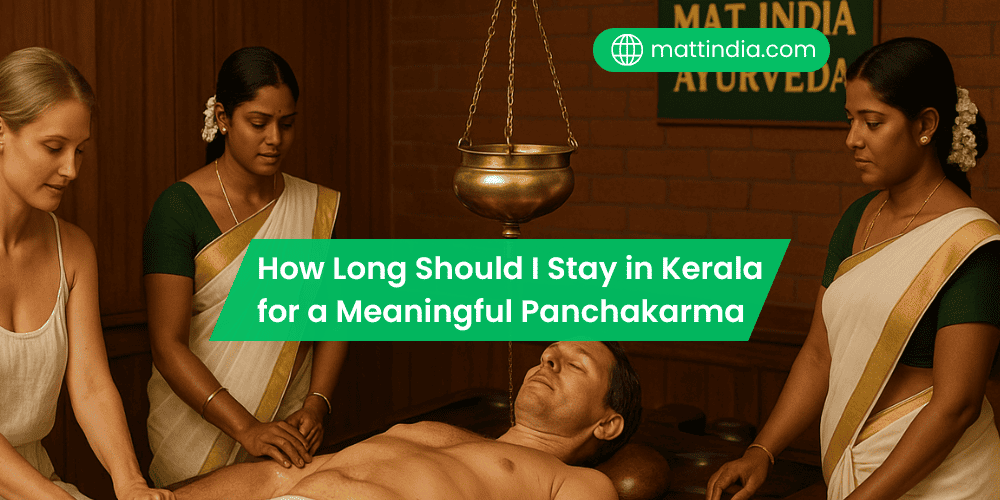
Apparently,You’ve decided to gift your body and mind a genuine Panchakarma in Kerala. Brilliant choice. And ,Now comes the real question: How long should you stay—7, 14, or 21 days? While travel blogs toss around magic numbers, the best answer blends your lifestyle stress,time of year,current symptoms,dosha balance, and the amount of aftercare you can commit to once you return home. Therefore, In this guide, we compare the three classic timelines, explain what realistically fits into each, and outline who benefits most—so your retreat feels purposeful, not rushed.
First principles: what makes a Panchakarma “meaningful”?
A meaningful Panchakarma does three things well:
- Prepares the body through purvakarma (oilation and sweating) so tissues loosen ama without exhaustion.
- Applies the right main therapies (e.g., virechana, basti, nasya, or occasionally vamana) at the right intensity for your constitution and goals.
- Locks in the change with gentle rasayana (rejuvenation), a calmer routine, and a clear Ayurvedic diet plan for home.
Since these phases take time, your length of stay shapes the sustainability and depth of results. Get Panchakarma Therapy in Kerala.
The 7–Day Plan: Focused Reset (Best for Newcomers and Busy Professionals)
Who it suits:
frequent flyers carrying mental fog,bloating,and jet lag,first-timers wanting a taste before a longer course or travellers short on time,
What we can do well in 7 days
- Day 1–2 (Purvakarma + Assessment ): abhyanga daily,gentle swedana (steam/sweat),soft snehana (external and internal oilation),vikriti and prakriti reading (your baseline and imbalance) and detailed intake,.
- Day 3–5 (Targeted procedures): depending on findings, we may run a nasya (nasal cleansing) for worry-driven headaches and chronic sinus tension,a light basti series for Vata derangement, or mild virechana (purgation) for Pitta overload.
- Day 6–7 (Re-entry & Rejuvenation ): an Ayurvedic diet handover you can actually follow on the flight home,breathwork,simple yoga,and shirodhara to quiet the nervous system .
What to expect:
a practical home routine,a calmer mind,better sleep, lighter digestion,and less bloating,. Anyhow , long-standing issues—chronic back pain,cycle irregularity,stubborn weight, or skin flares—normally require more time.
The 14–Day Plan: Therapeutic Depth (The Sweet Spot for Most Guests)
Who it suits:
people with early metabolic signs (central heaviness,cravings,sugar dips, ),migraines,mild hormonal swings, stress-related insomnia, or recurring digestive issues
Why two weeks work so well
- Purvakarma gets space. We can steadily ramp snehapana (internal ghee/oil as prescribed), daily abhyanga, dry udvartana (for Kapha heaviness), and focused swedana to mobilise ama without fatigue.
- Main procedures gain precision. With time to observe your response, we can schedule one strong virechana day or a structured basti series (e.g., alternating anuvasana oil enema and niruha decoction enema) that truly calms Vata.
- Mind-care embeds. Multiple shirodhara sessions, guided relaxation, and breath-led yoga retrain your stress circuitry while the gut resets.
Typical arc at MATT INDIA AYURVEDA
- Days 1–4: diagnostics, purvakarma, diet calibration, sleep regularisation
- Days 5–9: main action (virechana or basti protocol, plus adjuvants like nasya or kati-basti for the lower back)
- Days 10–14: rasayana (rejuvenation), step-down planning for home and tissue nourishment
What to expect: a calmer mood baseline,fewer cravings,improved sleep architecture,regular bowels,steadier energy, and clearer skin tone.Consequently, For many, 14 days delivers the most efficient price–benefit ratio. Get Kerala Panchakarma Ayurveda Treatment Package.
The 21–Day Plan: Deep Repatterning (Chronic, Relapsing, or Long-Ignored Issues)
Who it suits: chronic constipation and anxiety cycles (Vata), long-standing acidity/skin flares (Pitta), entrenched mucus/weight retention (Kapha), and complex “modern burnout” where digestion, sleep, and mood all swing together.
Why three weeks transform
- Layered protocols: we can run a full basti course (8–16 sittings depending on case), pizhichil (warm oil bathing) for deep neuromuscular relaxation, hrid-basti for chest heaviness, or add local therapies—netra-tarpana for eye strain, and integrate virechana if Pitta warrants it,.
- Neural recalibration: enough repetition to anchor new dinacharya (daily routine),breath,movement,meal timing, and waking cues, so your nervous system expects calm, not crisis.
- Stability for travel home: consequently,the final week prevents the relapse many travellers feel after short programs,strengthens agni, and locks in rasayana.
What to expect: symptom relief with a sturdier base—more resilient digestion, steady mood, better skin or joint comfort, and the confidence to maintain a sattvic routine in your city life.
Choosing by Dosha & Goal (Quick Matrix)
- Mainly Vata (scattered sleep,cold limbs,constipation, anxiety, ): fourteen or twenty one days with basti focus,warm abhyanga, early nights, and grounding meals
- Mainly Kapha (sluggish mornings,heaviness,mucus,sugar cravings, ): 14 days with udvartana,brisk walks,and spiced teas, ; 21 days if weight and sinuses have been stuck for years.
- Mainly Pitta (acidity,irritability,skin heat, migraines,): 14 days usually suffice with staged virechana,cooling packs,coconut-based diet, and meditation, ; It is ideal to consider undergoing 21 days for chronic relapse.
Most importantly Remember, few people are pure types. We’ll read your prakriti/vikriti and blend methods accordingly.
Kerala Timing: Does Season Matter?
Yes. The famed Kerala monsoon (roughly June–September) softens the air, opens pores, and supports deeper oil therapies; many guests report faster relaxation. Nevertheless, winter and early summer also work beautifully if we tailor swedana and hydration. Because Panchakarma Kerala adapts to climate, book dates that you can honour fully; consistency matters more than the calendar.
What a Day Looks Like (Example, Customised on Arrival)
- 6:30–7:00 am: wake, warm water, gentle breathwork
- 7:30 am: light yoga; sun or monsoon walk under canopy
- 8:00 am: breakfast (e.g., millet upma with ginger for Kapha,steamed idli with coconut chutney for Pitta;rice porridge with ghee for Vata;;)
- 10:00 am: main therapy slot (abhyanga, shirodhara,basti day,orvirechana preparation,, )
- 1:00 pm: main meal—simple, warm, spiced for agni
- 3:30 pm: rest, journalling, herbal tea, physician review
- 5:00 pm: supportive therapy (nasya, kati-basti, or udvartana)
- 7:00 pm: light dinner; tech downshift
- 9:30 pm: lights out; sleep-first policy
Because your body heals between sessions, we protect naps and quiet time as much as we cherish the marquee treatments.
Preparing to Travel: Make the Most of Any Duration
- Two weeks before: reduce alcohol, ultra-spicy food, and late nights.
- One week before: simplify meals; add warm water sips; practice earlier bedtimes.
- Two days before: pack loose cottons, a simple notebook, your medication list, and an open mind.
- On arrival: we test and taste; you don’t need to “know everything”—you’ll learn by feeling.
These tiny steps let purvakarma start quickly, saving precious days in a 7-day plan and deepening outcomes in 14–21 days.
Aftercare: Keep What You Gained
The retreat ends; the reset continues.
- Diet bridge: we provide a week-by-week Ayurvedic diet handover that expands choice without crashing agni.
- Rituals: you should keep two anchors: sleep schedule and warm breakfast even if work schedule or life gets busy.
- Home therapies: you can practice seasonal spices (cumin–coriander–fennel tea or ginger–tulsi),evening breathwork, and weekly self-abhyanga
- Follow-up: Normally tele-consults let us adjust routine and herbs as real life returns.
Since transformation needs repetition, these small practices make 7, 14, or 21 days last for months.
Related Articles:
» How Ayurveda Panchakarma Restores Balance and Boosts Immunity?
» What to expect during your first Panchakarma Therapy session?
» What to Expect from Kerala Panchakarma Ayurveda Treatment Packages?
» Panchakarma for Stress Relief: A Natural Solution
» Rejuvenate Your Body and Mind with Panchakarma Treatment
Which Duration Should You Choose? Our Honest Take
- Choose 7 days if you want a reset: jet lag, bloat, low mood, or curiosity about Panchakarma.
- Choose 14 days if you want therapeutic change without overhauling your calendar; this is the best value for most guests.
- Choose 21 days if you want deep repatterning for chronic or relapsing issues and the time to rebuild routine and resilience.
At MATT INDIA AYURVEDA, we design the plan after we examine you—not before—so each day fits your Vata–Pitta–Kapha story and your goals.
Choosing the Perfect Panchakarma Plan for Your Healing Goals
Apparently,meaningful Panchakarma isn’t about a perfect number; it’s about a fitting sequence for your life and body . Subsequently,a 21-day immersion repatterns,a 14-day course heals, and a 7-day stay resets,. In addition,choose the window you can honour fully, arrive ready to slow down, and let Kerala do the rest. Furthermore,If you’d like a personalised timeline based on your health goals,travel dates, and dosha, the physicians at MATT INDIA AYURVEDA will craft a plan that feels deeply restorative,effective, and humane.
FAQs
Yes, but you should consider it a reset, not a cure. Apparently,You’ll learn a home plan,digest easier, and sleep better,. Anyhow , chronic mood patterns,gut, or skin, respond far better to fourteen to twenty one days.
No. Panchakarma isn’t endless purging. We build with purvakarma, then schedule main procedures (like virechana or a basti series) on specific days, followed by rejuvenation. Your plan depends on your dosha and current strength.
We adapt. For some, dry udvartana, decoctions, or gentler snehana work better at first. The aim is to support agni and release ama without overwhelm.
The monsoon months are classic for deep therapy, yet we run effective programs year-round. We adjust swedana, oils, hydration, and rest to suit the climate you arrive in.
We give you a step-down diet, a two-point dinacharya (sleep + warm breakfast), and simple weekly self-abhyanga. Follow-up consults help fine-tune herbs and routine as your schedule changes.