
Anxiety is not always caused by something that happens on a large scale. Sometimes, it grows quietly. Someone lays awake for days at a time, rarely eats, overthoughts and drinks excessive amounts of caffeine—until the body begins to whisper in quiet warnings. The chest feels tight. The mind keeps running. Sleep becomes light. Even simple tasks feel heavy. Now this is where Ayurveda for anxiety offers a different explanation of the problem.
MATT INDIA AYURVEDA, does not only see anxiety as a psychological problem. Ayurveda takes an integrated approach, looking not only at the mind and body, but also the digestion, sleep, lifestyle choices, emotional state & health of one’s nervous system. It also does not intend to forcibly “turn off” the mind. It acts to soothe the unrest within, fortify the body and restore the self.
Understanding Anxiety Through Ayurveda
In Ayurveda, anxiety is typically associated with an imbalance of Vata dosha. Vata governs movement, thoughts, breath, nerve impulses, creativity and alertness. If you keep Vata balanced, one is feellight, active and inspired and flexible. On the other hand, When Vata becomes disturbed then the mind may feel restless, fearful, scattered and unstable.
That is why people with anxiety often say, my mind does not stop talking, or I feel stressed even when nothing happens. In addition, signs of Vata imbalance can manifest as dry skin, constipation, gas, sleep disturbances (or insomnia), trembling or involuntary movements in the body and a plethora of others such as poor appetite or inconsistent moods.
In Ayurveda, you also consider anxiety a manifestation of two qualities in the mind- Rajas and Tamas. Rajas are responsible for overactivity, racing thinking, irritability and fear. On the other hand, Tamas can have heaviness, low motivation, dullness and withdrawal. Hence, Ayurvedic healing aims for the production of Sattva or a state of mind which is calm and pure. Get Kerala Ayurveda Stress Management Package.
Common Causes of Anxiety According to Ayurveda
Ayurveda does not blame anxiety on one reason. Instead, it studies the person’s daily routine, food habits, sleep pattern, digestion, stress load, and emotional history. Some common causes include:
|
Cause |
Ayurvedic View |
Common Effect |
|
Irregular sleep |
Disturbs Vata and mind rhythm |
Restlessness, overthinking |
|
Excess caffeine |
Increases dryness and stimulation |
Palpitations, nervousness |
|
Skipping meals |
Weakens digestion and stability |
Shaking, irritability |
|
Too much screen time |
Overloads senses |
Poor sleep, mental fatigue |
|
Suppressed emotions |
Blocks natural mental flow |
Fear, tension, sadness |
|
Weak digestion |
Creates Ama or toxins |
Brain fog, heaviness |
|
Fast lifestyle |
Aggravates Vata |
Anxiety, poor grounding |
Thus Ayurvedic treatment for anxiety starts with daily routines correction, food, sleep and support to the nervous system.
How Ayurveda Heals Anxiety Naturally
In Ayurveda, layered healing works best to heal anxiety. To start with, it soothes the irritated Vata. Next, it works your bowels and enhances sleep. Then it strengthens your nervous system Additionally, it directs the individual to a schedule which develops an emotional equilibrium.
1. Dinacharya: A Stable Daily Routine
Having a fixed routine is among the best medicines given in Ayurveda. Life with no rhythm makes anxiety worse. So, Ayurveda says wake at the same time, eat food on time, sleep early and keep the evening calm.
Habits like oil massage, warm bathing, light stretching and breathing practice can be strongly grounding. In fact, it makes you feel better when those people have no idea what to expect from the body each day.
2. Abhyanga: Oil Massage for the Nervous System
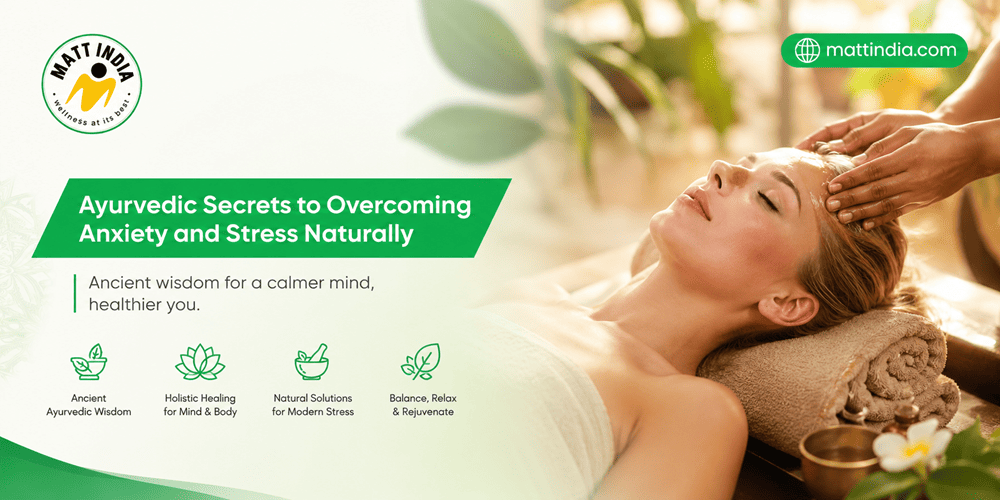
Abhyanga means warm oil massage. This is one of their preferred herbs for calming Vata and soothing the nerve in Ayurveda. Gentle pressure with warm medicinal oils to help the body to release. In addition, the touch itself has a grounding effect and makes people feel safe.
In conditions where on examining, we find the patient is restless, complains of dry skin or sleeplessness and has muscle tension; Abhyanga can benefit too. It is also increases sleep quality and emotional regulation, if practiced regularly with guidance.
3. Shirodhara: Deep Relaxation for the Mind
One of the most popular Ayurvedic treatments for anxiety is Shirodhara. Here warm medicated oil is allowed to flow on the forehead in a continuous stream. The treatment is deeply calming in nature — something that will work wonders for a person with racing thoughts, sleep disturbance, stress, and mental fatigue.
Your forehead is connected to relaxation, sensory soothing and emotional comfort. As a result, Shirodhara is frequently prescribed at Ayurvedic centres to treat stress and sleep problems associated with burnout or anxiety.
4. Herbal Support for Stress and Sleep
Ayurveda is the use of herbs to help heal us mentally and physically. They can have any commonly consumed herbs, such as Ashwagandha (Withania somnifera), Brahmi (Bacopa monnieri), Jatamansi (Nardostachys jatamansi), Shankhpushpi or Vacha (Acorus calamus) depending on the prakriti and condition of the person.
But herbs are not random; you are not putting spices in your food. There are some for cooling herbs, and there are those who need grounding herbs. Furthermore, anyone already using medicines for anxiety or depression, blood pressure, thyroid problems, diabetes and sleep should consult a qualified practitioner before taking herbal medicines.
At MATT INDIA AYURVEDA, the focus stays on personalised care rather than one common formula for everyone.
5. Food That Calms Vata
It is a big part of managing natural anxiety and fear. In times when Vata is in excess, it may be best to avoid cold, dry, light and erratic food. This is why Ayurveda tends to recommend warm, moist, gentle, and freshly made foods.
Rice porridge, vegetable soups, moderate use of ghee, warm milk with favourable spices, cooked vegetables and mung dal & herbal teas. For those suffering from anxiety — you may have to cut excessive tea, coffee, packed snacks, cold drinks, raw salads at night and late-night eating.
A simple food rule is this: eat warm, eat calmly, and eat on time. Get Ayurvedic Treatment for Anxiety, Depression, Insomnia.
Ayurvedic Therapies Used for Anxiety
|
Therapy |
Purpose |
Best For |
|
Abhyanga |
Calms Vata and relaxes muscles |
Restlessness, body tension |
|
Shirodhara |
Soothes the mind |
Racing thoughts, poor sleep |
|
Nasya |
Supports head and sense organs |
Stress, heaviness, mental fog |
|
Swedana |
Gentle sweating therapy |
Stiffness, blocked energy |
|
Pizhichil |
Warm oil therapy |
Deep fatigue, nervous weakness |
|
Takradhara |
Cooling therapy |
Heat, irritability, stress |
These therapies are most effective when selected by a physician following adequate consultation. Also, Ayurveda does not consider the therapy as a spa service. As a component of total healing it applies therapy.
Yoga, Pranayama, and Meditation
Ayurveda and yoga go hand in hand. Ayurveda works on the body and brings a desirable balance while yoga trains the breath and mind. Gentle yoga, slow or restorative movements, and grounding postures can facilitate the release of tension held in the body from past experiences. Yet, strong or speedy practices do not work for everyone suffering from anxiety.
Even pranayama for anxiety should be gentle. Breathwork: Deep belly breathing, alternate nostril breathing or slow exhalation can soothe the nervous system. Do not breathe forcefully unless a trained teacher has guided you to do so.
To those who attempt to teach you that meditation is complex. Sometimes even just five minutes of sitting quietly and following the breath with relaxed shoulders can help. Eventually, the mind learns that it does not need to follow each thought. Get Kerala Panchakarma Ayurveda Treatment Package.
Lifestyle Tips from Ayurveda for Anxiety Relief
Here are simple practices that support Ayurvedic anxiety relief:
- Sleep before 10:30 pm whenever possible.
- Eat meals at regular times.
- Avoid checking the phone immediately after waking.
- Take warm water through the day.
- Spend time in natural sunlight.
- Walk slowly after dinner.
- Reduce caffeine, especially after noon.
- Apply warm oil to the feet before sleep.
- Keep the bedroom dark, quiet, and cool.
- Talk to someone when emotions feel heavy.
Moreover, avoid self-judgement. Anxiety is not a weakness. It signals that the system requires care, rest and steadiness.
When Should You Seek Help?
It can help anxiety, stress, sleep problems and emotional imbalance. But if anxiety leads you to panic attacks, severe fear, chest pain, thoughts of suicide, inability to go to work or stay awake for more than a few hours in three weeks —then it is time to see a doctor. In such cases with good mental health treatment, Ayurveda can help as a supportive care system.
A safe approach is always better than a quick approach.
Related Articles:
» Best Ayurveda Packages for Stress Relief and Better Sleep
» How Ayurveda Rejuvenation Therapy in Kerala Helps Reduce Stress & Restore Energy?
» Stress Relief to Detox: The Transformative Benefits of Ayurveda Treatment
» Ayurvedic Treatments for Stress Relief and Relaxation
» Abhyanga for Stress Relief: An Ayurvedic Approach to Relaxation
Why Choose MATT INDIA AYURVEDA?
MATT INDIA AYURVEDA emphasises individual treatment planning with traditional Ayurvedic therapy. Rather than one dose of medicine or therapy fits all, they analyze your prakriti, Way of living, Digestion, Sleep, Triggers of Stress and emotional condition.
So the healing plan could include change in diet, herb support, therapy instruction, yoga asana, pranayama and daily routine instruction. This holistic method ensures that the individual remains calm not only in the treatment but also whilst being back to normal life.
Restoring Inner Balance: The Ayurvedic Path Beyond Anxiety
Anxiety can cause a person to feel like they are not connected with their own body. Ayurveda helps rebuild that connection. It calms down the system, feeds the nerves, enables sleep and helps digestion providing rhythm to life.
The most important aspect of how Ayurveda heals anxiety is by treating the person and not just the symptom. Life can become calmer again when the mind is understood and calmed with the right instructions, daily discipline and emotional care.
FAQs: Ayurvedic Secrets to Overcoming Anxiety and Stress Naturally
By balancing Vata, improving sleep and calming the nervous system, amending lifestyle habits Ayurveda can help anxiety management naturally! But they can also, in some cases, require medical or psychological help for more severe anxiety.
Typical Vata imbalance is associated with anxiety. But it may also involve Pitta and Kapha depending on the symptoms of that person.
Shirodhara is mainly used in Ayurvedic treatment for stress, overload of thoughts, sleep problems and mental agitation. Leave the choice of oil and time to a doctor.
Ayurveda would prescribe Ashwagandha, Brahmi Jatamansi and Shankhpushpi. As for the best herb, it primarily varies depending on their body type and existing health issues.
Keep herbs and psychiatric medicines separate without a doctor. Certain herbs might have drug interaction.
If the stress on your body is mild then it may reduce over a few weeks. A plan for long-term anxiety may take a longer approach – with diet, routine, therapies and follow-up care.
Ayurveda may support the nervous system, but panic attacks need proper medical evaluation. Do not delay professional help.
Limit coffee, avoid cold foods, dry snacks, processed foods and late-night meals; restrict the sugar you take. And, these could aggravate Vata and sleep.
Yoga is not always compulsory but soothing yoga and breaths can increase treatment effects.
According to Ayurveda, Ama (toxins) are produced by weak digestion and they can interfere with mental clarity. And so digestion is a significant part of anxiety care.
In the hands of a qualified practitioner, it can be safe. Do not self medicate, especially with unknown herbal products.
For personalized Ayurvedic guidance, anyone who experiences stress, overthinking, poor sleep, nervousness and emotional imbalance or burnout can consult.