
Kerala and Ayurveda belong together. Not because it’s going to look good in a brochure, but because the pace of life, the climate, the food and the culture make it easy for you to finally slow down —and that’s when Ayurveda really takes effect. But planning an Ayurveda tour is not like planning a usual vacation. You might enjoy it if you take it as a quick “spa break”, but you risk missing some of the more profound benefits.
This MATT INDIA AYURVEDA guide could assist you organize your Kerala Ayurveda tour in a manner that is both practical and achievable. You’ll also learn, for example, how to pick the right season, how long you should stay, where the actual centre is that you have to cycle in and through your treatment and how to intersperse it with harmless tourism without destroying it all.
Begin With a Simple Question: What Do You Want to Fix or Improve?
Most people begin by scrutinizing packages. Instead, let’s begin with your body and your life.
Ask yourself:
- Do you feel burnt out and restless?
- Are you sleeping badly, even when you’re tired?
- Is digestion weak or unpredictable?
- Do you suffer from recurring neck, back or joint pain?
- Do you need a real detox and reset after an incredibly long and stressful year?
When you’re clear about the goal, your choices become easier. A short relaxation programme is very different from Panchakarma in Kerala. Even the food routine, the daily schedule, and the level of doctor supervision change.
Quick tip: Write down your top 3 concerns before you enquire. It helps the doctor guide you in the right direction from day one. Get Ayurveda Tour Package from Hildesheim to Kerala.
How Long Should Your Ayurveda Tour Be?
This is the part people often underestimate. Ayurveda is gradual. It builds results day by day—especially when the treatments, diet, and rest are consistent.
A realistic guide looks like this:
- 3–5 days: Best for relaxation, stress release, and “first taste” therapies
- 7–10 days: Solid for rejuvenation and mild lifestyle issues
- 14 days: Better for digestion, fatigue, hormone imbalance support, and deeper recovery
- 21–28 days: Ideal for traditional Panchakarma, stronger outcomes, and long-term change
If time is tight, don’t worry—you can still benefit. Just don’t think a 4-day vacation can fix something you’ve been dragging around for 4 years.
Choosing the Best Time to Visit Kerala for Ayurveda
Kerala is beautiful and green all year round, but everything changes in the season. Monsoon is said to be beneficial for Ayurveda as the body responds well to oil therapies and scrubs that cleanse it.
Here’s a simple seasonal breakdown:
- June to September (Monsoon): Great for deeper treatments and detox-style programmes
- October to February: Most comfortable weather for travel, perfect for first-time visitors
- March to May: Warmer months—choose a calmer coastal/backwater setting and stay hydrated
So: If you want: – comfort + easy travel Winter is the clear choice. If you are mainly coming for healing, and don’t mind a little rain here or there, monsoon can be lovely. Get Ayurveda Tour Package from Gütersloh to Kerala.
Where Should You Stay in Kerala?
Kerala isn’t one single vibe. A beach stay is not like an experience backwater, and a hill stay again feels different. What the ‘perfect’ location is depends on what you are after.
- Kovalam / Varkala: Beach calm, good for sleep support, stress relief, and gentle rejuvenation
- Alleppey / Kumarakom: Backwaters, slow rhythm, great for mental rest and nervous system reset
- Wayanad / Thekkady: Cooler air, quieter surroundings, more “retreat” feeling
- Thrissur / Palakkad belt: Often more traditional and treatment-focused
If you are in the mood for an Ayurveda and sightseeing in Kerala, it could be worthwhile to split your trip: a few days of sightseeing first, followed by a longer wellness stay where you truly settle in.
The Most Important Decision: Choosing an Authentic Ayurveda Centre
This matters more than the room view, honestly.
Some places sell “Ayurveda” like a menu—pick a massage, pick a facial, done. Authentic Ayurveda doesn’t work like that. It’s guided, personalised, and reviewed by a doctor.
When a center is truly Ayurveda-focused, you typically see:
- Good Ayurvedic doctor consultation and not just chatting for few minutes
- A plan that is based on you and your body and condition, rather than just a cookie-cutter routine for everyone
- Clean treatment rooms, professional therapists and transparent hygiene guidelines
- Program friendly (simple, warm, digestion-friendly) foods
- A daily cycle of rest, treatments and usually yoga/meditation
At MATT INDIA AYURVEDA, it should be as simple: your program fits you, not the other way! Get Ayurveda Tour Package from Siegen to Kerala.
What Treatments Might Be Included?
You don’t have to do this, but it helps if you know what’s standard in Ayurvedic treatments in Kerala so you’re not just guessing.
Often-used therapies include:
- Abhyanga (oil massage): Supports circulation, relaxation, and muscle recovery
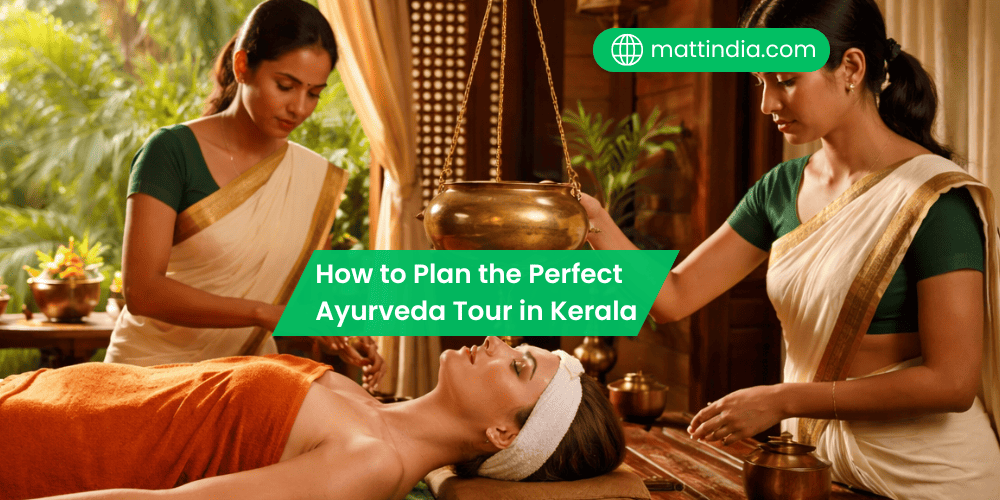
- Shirodhara: A calming therapy often chosen for stress, sleep, and nervous system overload
- Steam therapy: Helps Restore Stiffness + Detox Program
- Kizhi therapies (bundle treatments): Often used for pain, strength, and joint comfort
- Herbal support: Recommended as needed after the consult and sometimes with lifestyle guidance
If you are opting for Panchakarma treatment Kerala, it would be more strict regimen, internal purification processes and regularly monitoring. That is why longer stays and responsible observation are crucial.
Travel Planning: Don’t Overbook Your First Two Days
When you arrive in Kerala, your body is adjusting—to a new climate (hot), new food and often travel fatigue. If you arrive and right away hit the sightseeing circuit, you could begin your programme fatigued.
A calmer plan works better:
- Arrive, hydrate, rest
- Sleep early
- Do your doctor consultation fresh the next day
Also, if you’re doing deeper treatments, keep a buffer day at the end. Many people feel light, quiet, or a bit tired after intensive therapies. That’s normal. Give yourself space. Get Ayurveda Tour Package from Moers to Kerala.
Prepare Before You Come (It Makes a Big Difference)
A small preparation window—just 5–7 days—can help you settle into Ayurveda faster.
Before travel, try to:
- Reduce alcohol and smoking (even temporarily)
- Cut down heavy fried foods and late-night meals
- Drink warm water more often
- Walk daily, even short walks
- Aim for earlier sleep
These changes are simple, yet they make the first few treatment days smoother.
What to Pack for an Ayurveda Tour in Kerala
Pack like you’re going for comfort, not for parties.
Bring:
- Loose cotton clothes (oil therapies + Kerala weather = comfort first)
- Sandals/flip-flops
- Light shawl or scarf
- Personal medicines and basic medical reports
- Minimal perfume and heavy cosmetics (your skin will thank you)
Also, pack mentally for slower living. Ayurveda works best when you stop chasing too many plans. Get Ayurveda Tour Package from Trier to Kerala.
Can You Combine Ayurveda With Sightseeing?
Yes, but do it smart.
A good rule is: sightseeing first, treatments after. Once treatments begin, keep activities gentle and short.
Good light options:
- A calm backwater cruise
- Sunset beach walks
- Short temple visits in the morning
- Local village/market visit (not a long shopping marathon)
Do not plan for heavy hiking or travel at night, or go on a full day bus journey on days of treatment. You will be able to feel it, and your body will respond better when you give it a break.
Related Articles:
» Ayurveda Tour Package from Bergisch Gladbach to Kerala
» Ayurveda Tour Package from Remscheid to Kerala
» Ayurveda Tour Package from Bremerhaven to Kerala
» Ayurveda Tour Package from Erlangen to Kerala
» Ayurveda Tour Package from Koblenz to Kerala
Budgeting: What Affects the Price?
A Kerala Ayurveda package can range from simple to luxury. However, price alone doesn’t show quality.
Cost usually depends on:
- Number of days
- Doctor supervision frequency
- Treatment intensity (rejuvenation vs Panchakarma)
- Room type and location (beach/backwater/hills)
- What’s included (yoga, transfers, medicines, meals)
If your priority is healing, put your budget into authenticity and medical guidance first, then comfort next.
A Simple “Perfect Plan” Checklist
Before you finalise your tour, check this:
- You know your main goal (stress, pain, digestion, detox, etc.)
- You’ve chosen a realistic duration
- The centre offers doctor consultation and personalised planning
- You’ve picked a season that matches your comfort level
- You’ve kept your schedule calm, not crowded
- You’ve allowed time to rest at the start and end
When those boxes are ticked, your Ayurveda tour in Kerala becomes more than a holiday. It becomes a meaningful reset.
FAQs on “How to Plan the Perfect Ayurveda Tour in Kerala”
October to February is comfortable for travel. June to September (monsoon) is often chosen for deeper Ayurveda routines.
A good start for most people is 7–14 days. Panchakarma in Kerala for 14–21 days fits more appropriate.
Yes, generally. Prepare for the rain and plan your transfers accordingly. In fact, many travellers visit during the monsoon period for therapeutic stays.
Often yes, but you should share your medical history and reports. Your programme should be adjusted by an Ayurvedic doctor.
It can be, if it’s supervised well and you stay long enough. Do not cram Panchakarma onto a short trip.
Most of her meals are simple, warm and good for digestion. Many centers cater food to your condition and daily treatment plan.
Some people, sure —especially with clean food and consistency. But Ayurveda is less concerned with rapid weight loss and more about balance.
Steer clear of late nights, strenuous workouts and heavy drinking or sightseeing. Rest is part of the therapy.
Most are gentle. Some detox steps can feel intense, yet they should always be monitored and explained by the doctor.
Yes. Couples will be able to stay together, but treatment is generally personalized for each individual.
Look out for regular doctor’s visits, individual plans, trained therapists, clear hygiene and routine schedule throughout the day.
You’re better off leaving yourself an extra day. After long, intense workouts, your body may require some hushed rest before a big trip.