
Feeling on edge or low can drain every part of life. However Ayurveda provide gentle, structured path to recover balance. Therefore if you live with anxiety or depression, a personalised Ayurvedic plan can support your mind, body & routine. Moreover it pairs practical daily habits with food, herbs, breath & rest. As a result you gain tool that calm nervous system and rebuild resilience over time.
Understanding the Ayurvedic lens
Ayurveda view mental wellbeing through doshas—Vata, Pitta & Kapha and the strength of Agni (digestive fire) & Ojas (vital resilience). When Vata rises thoughts race and sleep breaks easily. Moreover digestion turns irregular and appetite fluctuates. When Pitta spikes, irritability, perfectionism and heat symptom appear fastly. Additionally, Kapha imbalance can slow motivation and cloud mood. Therefore, your practitioner maps symptoms to dosha patterns and builds a plan that steadies the root causes. Consequently care becomes targeted rather than generic. Get Ayurveda Stress Management Package.
Daily rhythm that steadies the nervous system
Routines soothe sensitive minds. Therefore Ayurveda emphasises dinacharya, a daily schedule that trains moods and hormones. Moreover fixed wake times, warm water on rising and a calming evening wind-down stabilise circadian rhythms. Additionally, you eat meals at consistent hours and finish dinner early. Consequently sleep improves and morning energy rises. Because anxiety thrive on unpredictability, a predictable rhythm reduce spikes dramatically. Meanwhile you gain confidence as small habits stack into reliable calm.
Grounding foods for steadier moods
Food works like daily medicine. Therefore a sattvic diet prioritises warm, simple and freshly prepared meals. Moreover think cooked grains, seasonal vegetables, gentle proteins, ghee and digestive spices. Additionally minimise ultra-processed snack, excess caffeine, late sugar hits and long gap between meals. Consequently Agni stabilises and cravings ease. When Vata dominates choose root vegetable, stew and soup with ginger, cumin and fennel. When Pitta feel high prefer cooling food like cucumber, coriander and tender green. Furthermore if Kapha pulls mood downward lighten portions, add bitter greens and favour warming spices. Therefore you feed balance rather than symptoms.
Herbal allies used with care
Several Ayurvedic herb for anxiety and depression can help when used responsibly. Ashwagandha support stress resilience & sleep quality. Moreover Brahmi (Bacopa) enhance mental clarity as well as focus. Additionally Jatamansi soothes restlessness and support deeper rest. Shankhpushpi and Tulsi can calm mental chatter and uplift mood gently. Consequently many people feel steadier within weeks. However herbs can interact with medicines. Therefore always consult a qualified professional particularly if you take antidepressant, anti-anxiety drug or have medical condition. Furthermore quality matters; choose reputable sources with testing and clear labels.
Touch therapies that calm the body
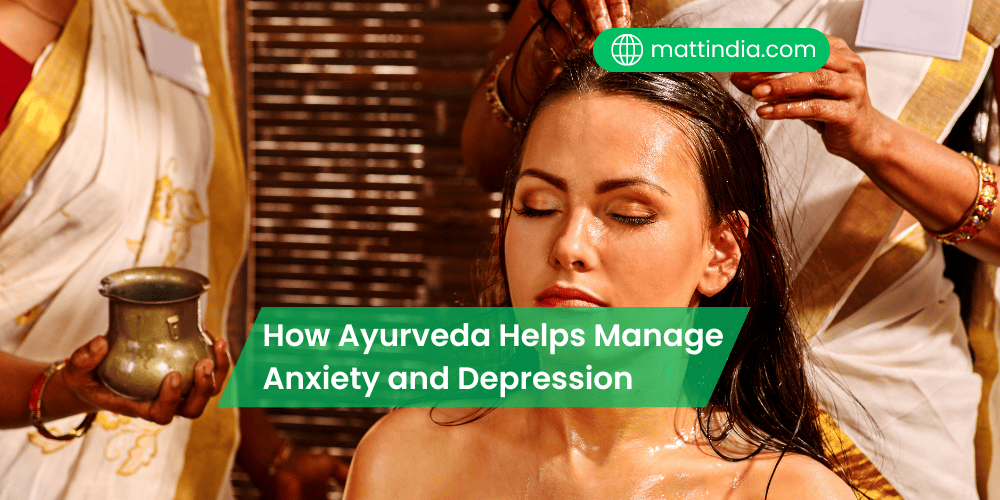
Ayurveda value therapeutic touch for nervous system. Therefore abhyanga—a warm sesame or medicated oil self-massage—help settle Vata and comfort the body. Moreover slow strokes down the limbs and circular movements over joints relax the fascia and muscles. Additionally many clinics offer shirodhara, a steady stream of warm oil poured across the forehead. Consequently the mind often quiets and sleep improves. While these therapies feel luxurious, they also work physiologically by cueing safety signals through skin and nerves. Therefore, regular practice deepens results.
Breath and movement that re-train stress
Breath regulates mood. Therefore add simple pranayama to your morning. Moreover Nadi Shodhana (alternate-nostril breathing) balance both sides of nervous system. Additionally Bhramari (humming breath) reduces agitation quickly. Consequently, thoughts slow and focus returns. Pair breath with gentle yoga that favours forward folds, hip openers and unhurried flows. Furthermore finish evenings with Yoga Nidra or guided relaxation. Therefore your brain learns to downshift on command, which protects mood during busy days.
Sleep hygiene with Ayurvedic nuance
Rest heals emotions. Therefore aim for consistent nights with screens dimmed early and lights warm. Moreover sip a small cup of warm milk or nut milk with nutmeg and cardamom if your practitioner agrees. Additionally, journal three grateful moments before bed to ease rumination. Consequently, your mind parks the day and welcomes sleep. Because devices stimulate Pitta and Vata, move them out of the bedroom when possible. Therefore, you protect the sanctuary that renews your mood.
Sunlight, nature and gentle exposure
Morning light sets your clock. Therefore, seek sunlight within an hour of waking. Moreover, combine light with an easy walk to boost mood hormones naturally. Additionally, spend time in green spaces where noise softens and breath deepens. Consequently, anxiety drops while perspective returns. Although this habit look simple it enhance all other step by locking circadian rhythm. Therefore treat it as a non-negotiable part of your plan.
Emotional digestion and supportive therapy
Ayurveda respects feelings as part of health. Therefore, use reflective practices that process events kindly. Moreover, many people pair Ayurvedic care with counselling or CBT for practical skills. Additionally, journaling, mantra recitation and gratitude practices help re-wire attention gently. Consequently, difficult cycles lose momentum. If you feel overwhelmed or notice red flag contact licensed mental health professional immediately. Therefore, you stay safe while exploring holistic tools.
Safety and teamwork with your clinicians
Holistic does not mean isolated. Therefore, keep your GP or psychiatrist informed about herbs, routines and progress. Moreover share lab result, medication change and sleep data when relevant. Additionally your Ayurvedic practitioner should coordinate respectfully with your medical team. Consequently plans align and risks drop. If any herb worsens anxiety, creates sedation or affects blood pressure, stop and seek guidance. Therefore, you protect results and your wellbeing.
Related Articles
» The Stress Relief Therapies Using Ayurveda
» Ayurvedic Stress Management Techniques for a Calm and Balanced Life
» Healing Powers of Ayurveda in Kerala for Stress and Detox
» Best Ayurveda Therapy for Depression
» Ayurvedic Approaches to Overcoming Anxiety and Depression Naturally
Building a realistic starter plan
Many people feel better when they start small. Therefore, pick three actions for the next two weeks. Moreover, choose one food change, one breath practice and one sleep habit. Additionally schedule abhyanga twice weekly and a morning walk most days. Consequently, momentum grows without overwhelm. After two weeks, add a gentle herb if appropriate and review sleep quality. Therefore, progress becomes measurable and sustainable.
A Natural Path to Overcoming Anxiety and Depression
Ayurveda for anxiety and depression blend rhythm, nourishment, breath, herb, touch as well as light. Moreover it favour patient, consistent steps over drastic changes. Additionally, it respects individuality by matching plans to dosha patterns and daily realities. Therefore you gain a toolkit that supports therapy, medication or both. With time, nervous system resilience grow, sleep deepen and mood steadies. Consequently life feel clear, kinder and more spacious again.