

On some days, your brain feels like a browser with 30 tabs open. You start the day tired; you race through the morning and then bring that pressure to work, home, sleep. In addition, moods can shift — anger, anxiety, sadness, numbness — at times without a discernible stimulus. If this sounds like you, you’re not alone.
This is where Ayurveda can be genuinely helpful. Not because everything will be “fixed” overnight, but because you’re giving your nervous system what it craves: steady routine, nourishing food, deep rest, calming body therapies and mindful breathing. In other, more casual words, Ayurveda believes in the mind-body connection and doesn’t just treat your mind as if it’s one room and your body another.
At MATT INDIA AYURVEDA we often say: build stability in the body and emotional balance is more likely to follow. So let’s see how Ayurveda for mental health supports your mental and emotional well-being in a real, daily-life kind of way.
The Ayurvedic view of the mind: balance comes first
Ayurveda describes the mind using 3 mental—qualities . You don’t need to memorise them, but they’re useful:
- Sattva = clarity, calm, self-control, compassion
- Rajas = restlessness, overthinking, constant mental activity
- Tamas = heaviness, low drive, emotional dullness, “stuck” feeling
Now, here’s the key: Ayurveda doesn’t shame you for feeling rajas or tamas. Instead, it asks, “What’s disturbing your balance?” Then, it builds a plan that supports sattva—slowly, consistently, and kindly. Get Kerala Ayurvedic Treatments.
Doshas and emotions: why stress looks different for everyone
Your constitution and way of life can help in this moving the doshas — Vata, Pitta, Kapha — which influences mood and emotions. Ayurveda is most effective as a personalized practice, but this quick survey overview can still help.
|
Dosha out of balance |
How it often feels emotionally |
Helpful direction |
|
Vata |
worry, racing thoughts, fear, light sleep, mood swings |
grounding routine, warm foods, oil massage, early nights |
|
Pitta |
irritability, impatience, perfectionism, anger, burnout |
cooling habits, boundaries, calm breathwork, less spicy/late meals |
|
Kapha |
heaviness, low motivation, emotional eating, withdrawal |
movement, lighter meals, energising routine, morning sunlight |
So, instead of asking “What’s wrong with me?”, Ayurveda helps you ask, “What needs support right now?”
Daily routine: the simplest Ayurvedic therapy (that actually works)
Ayurveda loves dinacharya—a daily routine—because your brain relaxes when your day feels—predictable. Even small habits can reduce stress because they tell your nervous—system: “You’re safe.”
Here’s a gentle routine you can start without feeling—overwhelmed:
|
Time of day |
Micro-habit |
Why it supports well-being |
|
Morning |
5–10 minutes sunlight + warm water |
supports circadian rhythm and steadier mood |
|
Before breakfast |
3 minutes pranayama |
quiets mental noise and tension |
|
Midday |
proper lunch, no skipping |
prevents irritability and energy crashes |
|
Evening |
slower dinner + lighter foods |
supports sleep and emotional regulation |
|
Night |
foot massage or warm shower |
helps you unwind and sleep deeper |
Start with one habit. Then add another after a week. That slow build is the real secret. Get Kerala Ayurveda Body Immunization Therapy.
Food, digestion, and mood: Ayurveda takes “gut feelings” seriously
In Ayurveda, digestion doesn’t just handle food—it influences energy, clarity & emotional—steadiness. When digestion struggles, you might feel foggy, heavy/easily triggered. On the other hand, when digestion feels smooth, the mind often feels clearer too.
A sattvic—diet approach focuses on foods that feel fresh, light & nourishing:
- Warm, freshly cooked—meals more often
- Enough healthy—fats for grounding
- Gentle spices like cumin, coriander, fennel
- Less ultra-processed food and late-night snacking
- Balanced—caffeine
Also, how you eat matters. If you eat while scrolling or rushing, your mind stays on alert. Instead, try eating slowly for just 10 minutes a day. It sounds tiny, yet it can shift your whole day. Get Kerala Ayurveda Yoga and Ayurveda Retreats.
Abhyanga and touch therapy: calming the nervous system through the body
Sometimes emotions don’t respond to logic. You can “understand” your stress and still feel tense. That’s why Ayurveda uses body-based support.
Abhyanga (warm oil massage)
Abhyanga is a warm oil—massage that supports relaxation, grounding & sleep—quality. Many people feel calmer because the touch & warmth reduce nervous—system overdrive.
A simple at-home method:
- Warm a small amount of oil (sesame is often used; coconut suits people who feel very “hot”)
- Massage arms, legs, chest, and especially feet for 5–10 minutes
- Take a warm shower
Do it 3–4 times a week if you can. Even twice helps.
Shirodhara
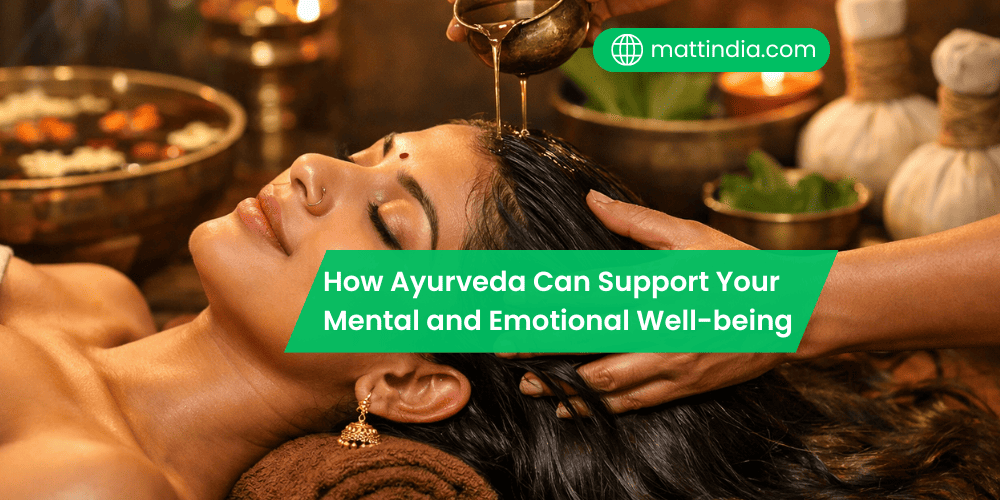
Shirodhara involves a gentle—stream of warm liquid on the forehead. People often describe a deep “quiet” in the mind after a session, especially if they feel overstimulated, mentally—tired/emotionally overloaded.
Breathwork and mind training: small practices, big effect
You don’t need an hour of meditation. Ayurveda works well with small steps that you repeat.
Try these:
- Nadi Shodhana : supports balance & calm
- Bhramari (humming breath): reduces agitation and mental buzzing
- Slow belly breathing: lowers—stress response quickly
Meanwhile, if your mind wanders during—meditation, that’s normal. The win is returning gently—again and again. That practice strengthens emotional steadiness over time. Get Kerala Ayurveda Stress Management Package.
Ayurveda herbs for mental calm: personalised use matters
Herbs such as Ashwagandha, Brahmi, Jatamansi, Shankhpushpi and Tulsi have traditionally been used in Ayurveda to nourish calm; sleep and mental clarity.
However, herbs aren’t “one size fits all.” They can interact with medications and may not suit certain conditions. So, please avoid self-prescribing. A practitioner can choose what fits your dosha, digestion, and symptoms.
Related Articles:
» Ayurvedic Approach to Mental Health: Holistic Wellness in Kerala
» Healing the Mind with Ayurveda: Kerala Traditional Approach to Mental Health
» Rejuvenate Your Body and Mind with Ayurvedic Therapies
» Panchakarma for Mental Health: A Holistic Approach to Wellness
» Rejuvenate Your Body and Mind with Panchakarma Treatment
Sleep: the foundation of emotional stability
If sleep is poor, your emotional tolerance drops fast. You get reactive. You overthink. You feel drained. That’s why Ayurveda treats sleep as a core therapy for mental and emotional well-being.
Try these sleep-friendly habits:
- Eat dinner earlier and keep it lighter
- Reduce bright—screens 45–60 minutes before bed
- Massage the feet before sleep
- Keep a consistent—bedtime most days
Even improving sleep by 30 minutes can make your mood noticeably—steadier.
Embracing Balance: Ayurveda’s Role in Nurturing Your Mind and Emotions
Ayurveda supports your mental and emotional well-being by bringing your entire system back into groove. It promotes regularity, supports digestion, creates deeper sleep and soothes the nervous system through breathwork and treatments such as abhyanga and shirodhara. Better yet, it feels attainable — because it begins with small steps that you can repeat.
To get personalised advice, MATT INDIA AYURVEDA aids you to select the most appropriate lifestyle plan and therapies that are best suited for your constitution and requirements.
FAQs on “How Ayurveda Can Support Your Mental and Emotional Well-being”
Yes. Ayurveda help mitigate stress through schedule, digestion attention, calmer treatments and pranayama.
Dinacharya is a daily—routine. It helps stabilise your nervous—system & mood through consistency.
Often Vata imbalance shows as racing thoughts, worry, and difficulty sleeping.
For weak agni is can cause unexplainable heavy feeling, brain fog and emotions.
A sattvic diet focuses on fresh, nourishing foods that support clarity and calm.
Many people find shirodhara deeply—relaxing & helpful for an overactive mind.
Abhyanga helps calm the nervous system through warmth, touch, and grounding effects.
Breathwork like Nadi Shodhana can reduce restlessness and support calm.
Not always. Herbs should be chosen based on your condition and medications—use professional guidance.
Some people feel better within days (sleep/routine changes). Deeper change often takes a few—weeks.
Chilling foods, fewer late nights working, relaxing breathwork and firmer boundaries.
The pregnant, those with medical conditions or anyone under medication need to consult a practitioner first.