
Stress does not often come blowing its warning trumpet. Many times it shows up as bad sleep, having persistent headaches, digestive issues, low patience or mental fatigue or even a sensation that you are not able to unwind yourself adequately. The World Health Organization says stress can impact sleep, appetite, focus and physical comfort. So addressing it at an early stage will be an add-on to not just mental wellness but physical wellness as well.
While those looking for a more thorough wellness break have begun turning to Panchakarma for stress relief. Instead of a single regular massage, a real Panchakarma plan may deliver Ayurvedic values, oil therapy, diet system and specifics for relaxation/ yoga or meditation process and target-specific cleaning method.
The location where you receive the therapy is important. Ayurveda is pulling you in Kerala, the state has its ancient bond with Ayurveda, trained practitioners for all traditional treatment ways and peaceful nature. The international wellness tourists often opt for Panchakarma in Kerala when they need a break from pressure, screens and busy schedules.
What Is Panchakarma?
Panchakarma is derived from two Sanskrit words, pancha and karma, which mean five procedures or actions. It implies a set of purifying & rejuvenating emissions in classical Ayurveda catered individually based on constitution, health condition and digestive strength.
Panchakarma does not imply that every single guest has all five therapies. The first step is to have a qualified Ayurvedic doctor go over your health history, current medicines, sleep habits, appetite and digestion capacity and stress level as well as daily habits. Based on the diagnosis, you can either be prescribed an entire plan, a mild cleansing program or a simple rejuvenation therapy.
According to Kerala Tourism, Panchakarma is a traditional rejuvenation treatment that can differ from one centre and person to another. Get details on Panchakarma Therapy in Kerala.
A structured programme often moves through three stages:
|
Stage |
Common focus |
Purpose |
|
Purvakarma |
Preparation, oiling and gentle heat therapies |
Prepares the body for selected procedures |
|
Pradhanakarma |
Doctor-prescribed cleansing methods |
Forms the main therapeutic stage |
|
Paschatkarma |
Rest, diet and gradual recovery |
Helps rebuild strength and digestion |
How Can Panchakarma Support Stress Management?
Ayurveda treats mental tension as a state of mind. Irregularity in meals during late nights, travelling too much, emotional stress overload, overwork and screen all the time may disrupt the rhythm of our body. These programmes are therefore sited on the overall routine as opposed to a habit.
1. It creates space for proper rest
A lot of people take work leave, but continue to look at e-mails, answer calls and scroll late into the night. Conversely, residential Ayurvedic retreat in Kerala allows the mind to take a breather.
You have a daily routine which might consist of treatment, bland meals, silence periods, little exercise and early to bed. There are a reduced number of choices demanding attention, the nervous system finally has an opportunity to ease and calm.
2. Warm oil therapies encourage relaxation
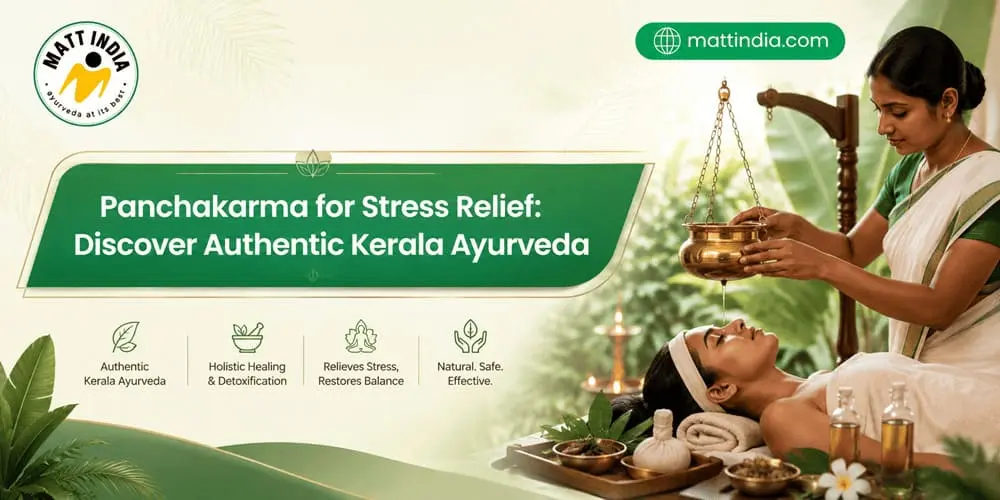
Depending on the assessment of the disorder offered by the doctor, Abhyanga (a rhythmic warm-oil application to the body) or Shirodhara ( a therapy where a controlled stream of liquid flows over your forehead); finds its way around in this programme.
Often guests are sharing that these treatments induce levels of deep calm. They should be an element of a supervised programme rather than substitute for professional mental-health treatment.
3. A regular routine supports better sleep habits
Stress leads to poor sleep and vice versa. You are uptight, and you suffer sleep problems. Then on account of the fact that you slept poorly, you are left feeling more irritable and anxious later in the day.
Maintaining the same hours for meals, spending less time on screens, earlier evenings and relaxation practices will guide you through Panchakarma therapy against stress to get rid of these unhealthy habits. Therefore, most of the guests start to realise what their body requires for a pleasant sleep.
4. Simple food reduces daily overload
For example, Ayurvedic programmes will typically offer daily freshly prepared meals which are quick to digest based on your level of treatment. Guests are served a planned diet instead of heavy restaurant food, caffeine overload or random snacks.
With no constant dietary overload the body can concentrate on rest and recovery much more effectively. The menu should still be adjusted for allergies and medical needs, as well as nutritional requirements.
5. Yoga and breathing practices improve body awareness
Kerala wellness programmes are often associated with gentle yoga, meditation and controlled breathing. But these practices don’t eliminate all stress. However, it might help guests see tensions sooner and respond more peaceably.
Individual Ayurvedic treatments, on the other hand, are not well studied, whereas mind body practices ,including yoga have been studied in greater depth. Panchakarma treatment is a complementary wellness programme and not a magic cure. Get Panchakarma Kerala Ayurveda Treatment.
Why Kerala Is the Right Place for Panchakarma
A strong living tradition of Ayurveda
Kerala does not view Ayurveda simply as a spa fad.Ayurvedic hospitals, pharmacies and teaching institutions and a lot of family traditions have been functioning within the state. As a result, visitors are treated in the context of a larger culture of Ayurvedic living.
This region is popular for medicated oils, programmes led by physicians to report and manipulation techniques as well as revitalization treatments. Kerala Tourism too appreciates Ayurveda as an essential element of the state’s wellness heritage.
Peaceful natural surroundings
The backwaters, forests, hills, beaches and tropical greenery of Kerala provide the perfect environment for a slower pace. And many retreats are located three miles away from loud commercial centers.
It is not just the location that cures stress. Then again, waking up with bird cries and trees outside the window can reduce some of your habitual conflicts in daily life.
Personalised doctor-led care
No medical screening is done and thus good Panchakarma should not follow a fixed tourist package. Rather treatments should be adjusted as per your body type and also according to age, strength, digestion and current situation of the person.
One guest might benefit from restorative oil treatments and additional rest; One might call for a strictly controlled detox phase. Likewise, treatment intensity may vary across the duration of a stay based on how individuals respond.
Access to established Ayurveda centres
Kerala offers a wide choice of Ayurvedic hospitals, wellness resorts and treatment centres. However, travellers should check the centre’s credentials carefully.
A classification system for Ayurveda centres was undertaken by the Kerala Government since it is well known that quality and safety standards can vary. Hence, it is crucial that you opt for an approved centre with experienced doctors and proper facilities along with documented treatment processes.
Suitable climate for traditional therapies
Ayurvedic tradition often regards Kerala’s humid monsoon period as suitable for oil-based rejuvenation programmes. Kerala Tourism commonly highlights the July–August period for seasonal Ayurvedic care.However, Panchakarma centres work throughout the year and depending on your health, comfort and physician’s recommendations, you can choose when to travel. Get Kerala Panchakarma Ayurveda Treatment Package.
What Happens During a Kerala Panchakarma Programme?
A comprehensive consultation should be the start of your stay. She may check your pulse, digestion, sleep, appetite and bowel habits as well as details of any stress or previous illnesses.
Afterwards, your schedule may include:
- Personalised Ayurvedic treatments
- Warm herbal oil applications
- Doctor-approved cleansing procedures
- Gentle yoga or stretching
- Meditation and breathing sessions
- Individually planned meals
- Rest periods between treatments
- Follow-up consultations
- Lifestyle advice for returning home
Programme duration varies. A short rejuvenation stay may last seven days, while a more complete physician-guided Panchakarma plan may require 14, 21 or 28 days. Generally, deeper programmes need enough time for preparation, treatment and recovery.
Related Services:
» Kerala Ayurveda Stress Management Package
» Kerala Ayurvedic Detox Package
» Rejuvenation Therapy in Kerala
Who Should Avoid Panchakarma Without Medical Approval?
Panchakarma can be intensive which is why it may not work for everyone. Pregnant women in particular, young children, very frail adults and those recovering from surgery are advised to discuss this with a doctor before taking them. Similarly, if you suffer from a serious heart, kidney, liver, digestive or psychiatric disease then you need to contact your treating doctor.
You may need to take more than one prescription medicine or supplement that needs to be discussed with your Ayurvedic physician. Certain herbal products can interact with medications, and poorly made products may have harmful ingredients. So pick a trusted centre and never halt medication given by the prescribed practitioner without authorisation by your preparer.
Related Articles:
» Ayurvedic Secrets to Overcoming Anxiety and Stress Naturally
» Benefits of Pizhichil Ayurveda Therapy for Pain Relief, Stress & Wellness
» How Ayurveda Rejuvenation Therapy in Kerala Helps Reduce Stress & Restore Energy?
» Stress Relief to Detox: Transformative Benefits of Ayurveda Treatment
» Top 10 Ayurvedic Treatments for Stress Relief and Relaxation
Preparing for Your Stress-Relief Retreat
You may be required to disclose your complete medical history with respect to the centre before travelling. Also ask if daily the programme will be supervised by a qualified Ayurvedic doctor.
Carry light cotton clothing, comfortable shoes and any medicines that they are taking regularly in the original containers. Don’t plan strenuous sightseeing on days that are high in the treatment intensity. The real effectiveness of Panchakarma can be evaluated when the human body gets enough time to rest.
Once we get home, don’t go back to late nights, greasy food and a hectic pace. Instead, gently reinstate normal activities but combine it with some helpful habits like regular meals, fewer screens, gentle movement and a fixed bedtime.
Begin a Calmer Wellness Journey with MATT INDIA AYURVEDA
Kerala Panchakarma retreat – A complete package that plans to be more than a temporary escape It also provides a framework for slowing down, evaluating your patterns, and returning to a healthier daily rhythm.
At MATT INDIA AYURVEDA, guests can discover authentic ayurvedic therapies in Kerala with balanced programs that are designed to deliver complete guidance based on their wellness goals. Whether its consultation, accommodation planning or treatment coordination every aspect of the journey can become clearer and less stressful.
First and foremost, take Panchakarma with realistic expectations. It should be complementary to your wellness journey and not a miracle. It can be a powerful introduction, if tempered with professional assistance, adequate rest and in an appropriate setting — to a more measured lifestyle in Kerala.
FAQs: Panchakarma for Stress Relief
The process of Panchakarma may help achieve relaxation via proper rest, oil therapies, detoxifying and strengthening food components, lifestyle and yoga guidance. But this helps is not the same for every person and it should by no means substitute treatment of a recognised mental-health disorder.
It may take seven days for a light rejuvenation programme. But the doctor-supervised Panchakarma usually extends from 14 to 28 days, which can vary according to your health and treatment plan.
No. Massage is one component of Panchakarma, which can involve consultation, diet. cleansing procedures. and rest and recovery care — a more comprehensive program.
The calming routine, reduced screen exposure and relaxation therapies may support healthier sleep habits. Still, persistent insomnia requires assessment by a qualified healthcare professional.
Many people choose the monsoon period between June and September. Nevertheless, reputable centres offer programmes throughout the year.
You may handle essential communication during a mild retreat. However, limiting work and screen time usually helps you gain more from a stress-relief programme.
Yes, most centres provide light Ayurvedic meals based on your treatment stage. You should disclose allergies, diabetes and other dietary needs before arrival.
No. Certain procedures may not suit pregnant women, frail people or those with serious medical conditions. A doctor must assess your suitability first.
In general, you are to keep the prescribed medicines unless it is directed contrary to your treating doctor. Provide the Ayurveda centre with a full list of medicines.
Look into centre approvals, doctor qualifications, sanitization levels, treatment monitoring, emergency arrangements and real client reviews.
Yes. Couples can both go to the same retreat, but doctors may devise different treatment plans for each.
The guests relax after a few days, others need more time; The habits you create on how to train and live your life after getting back home usually determine lasting benefits.